Content Delivery Networks explained: What they are, how they work, and how to make them better

Geo-DNS, Anycast, and GSLB: What’s the Best Approach for Global Performance?
July 15, 2025
AWS Outage 2025: How DynConD’s Client-Side GSLB Keeps Services Running
October 20, 2025The internet we rely on today — from websites and apps to videos and games — demands speed, stability, and reliability. One of the key technologies that enables this is the Content Delivery Network (CDN). CDNs have become the backbone of modern digital experiences, but they aren’t without limitations. Thankfully, a powerful enhancement exists in the form of client-side Global Server Load Balancing (GSLB).
Let’s break it all down — what CDNs are, how they work, what challenges they face, and how client-side GSLB offers a smarter way forward.
What is a CDN?
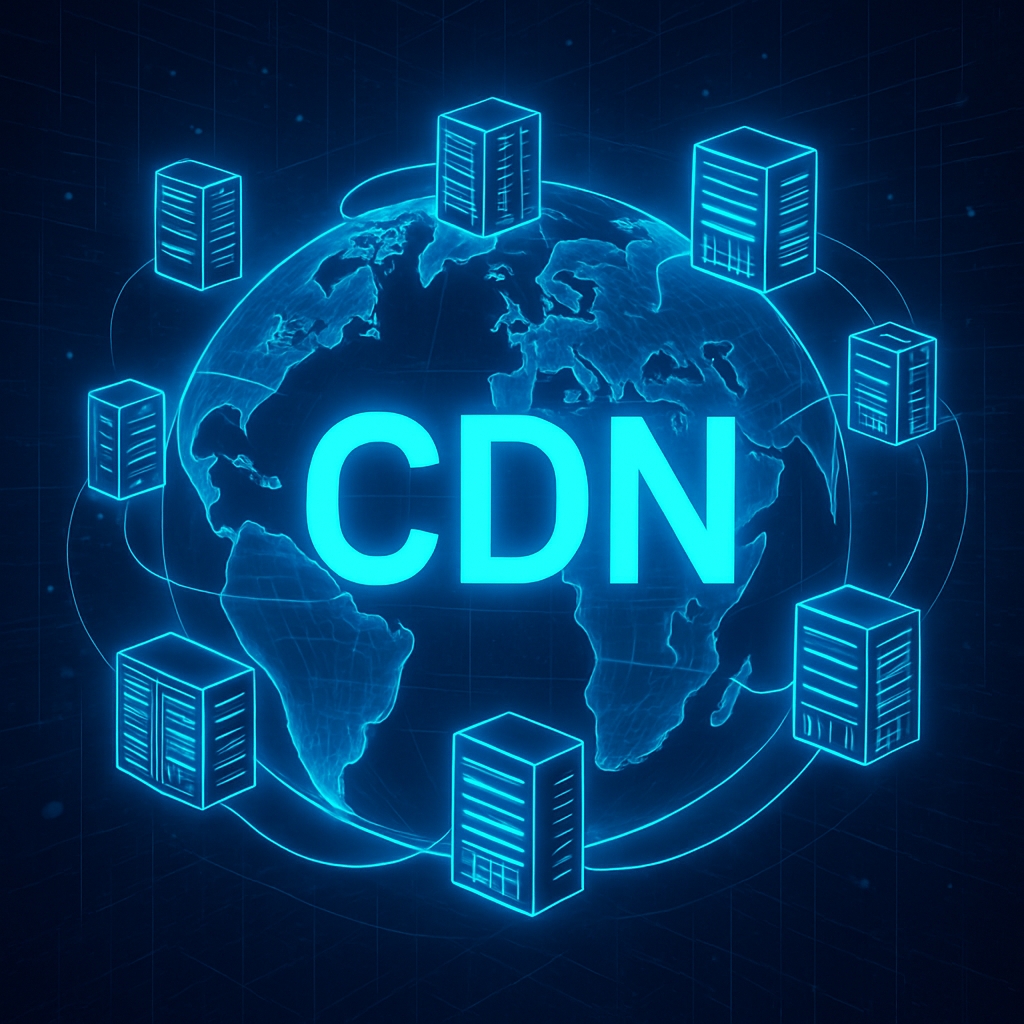
A Content Delivery Network (CDN) is a system of geographically distributed servers that work together to deliver digital content more efficiently to users around the world. Instead of fetching content from a single, centralized server, a CDN delivers it from the server that’s closest to the user — usually called an edge server.
These edge servers cache static content such as:
- HTML pages
- Images and videos
- JavaScript and CSS files
- Software downloads
This approach reduces the physical distance data must travel, resulting in faster load times, less strain on the origin server, and a better overall user experience.
How CDNs are used
CDNs are used across nearly every industry that delivers content online. Common use cases include:
- E-commerce sites serving high-resolution product images quickly
- Video streaming platforms reducing buffering by caching video segments near users
- News and media ensuring articles and headlines load instantly
- Gaming platforms distributing updates or patches globally
They’re also critical for managing traffic spikes, such as Black Friday sales or live events, by offloading traffic from the main server and distributing it across the network.
Advantages of Using a CDN
1. Faster Performance
By caching content at edge servers close to users, CDNs reduce latency and speed up load times.
2. Scalability
A well-implemented CDN can handle massive amounts of traffic without overwhelming the origin infrastructure.
3. Reliability
If one edge server fails or is overloaded, traffic can be rerouted to another node, ensuring high availability.
4. DDoS Protection
Many CDNs offer built-in security features, including DDoS mitigation and Web Application Firewalls (WAFs).
5. Lower Bandwidth Costs
Caching reduces the need for repeated data requests to the origin, which can help reduce data transfer expenses.
Limitations and Challenges of Traditional CDN
While CDNs offer major benefits, they aren’t flawless. Most of their routing decisions depend on DNS-based logic, which brings a few key issues:
- Inaccurate Routing: DNS routing is often based on the location of the DNS resolver, not the user. This can misdirect users to suboptimal servers.
- Slow Failover: If a server or region goes down, DNS changes may take minutes or hours to propagate — far too slow for real-time applications.
- Lack of Real-Time Awareness: DNS-based systems have no knowledge of current latency, congestion, or performance at the edge.
- Static Load Balancing: Traditional multi-CDN setups often use fixed rules (like round-robin or geo-based policies) which don’t adapt to real-time conditions.
These limitations mean that users might not always get the fastest or most reliable connection available — especially in a dynamic, global environment.
The Solution: Client-Side GSLB
To address these shortcomings, many modern systems are turning to client-side Global Server Load Balancing (GSLB). Rather than relying on DNS or centralized infrastructure to choose the best server, client-side GSLB puts the decision-making logic directly into the hands of the user’s device.
- The client device uses real-time data and performs measurements against multiple CDN or server endpoints.
- These tests measure actual latency, availability, or throughput in real time.
- Based on the results, the client selects the best-performing server for that moment.
- The client then makes the content request to that endpoint — ensuring optimal speed and reliability.
How Client-Side GSLB Enhances CDN Performance
Client-side GSLB brings several key improvements to traditional CDN architectures:
1. Real-Time Optimization
Instead of guessing based on outdated DNS info, the client knows exactly which server is fastest right now.
2. Improved Failover
If one server is down or degraded, the client can quickly switch to another — often in seconds, not minutes.
3. Smarter Multi-CDN Use
Organizations using multiple CDNs can let the client dynamically select the best one, rather than using static rules.
4. Better User Experience
Users consistently connect to the best-performing endpoint, resulting in smoother experiences for video, gaming, or ecommerce.
The Aftermath
CDNs have revolutionized the way content is delivered online. They’ve made it faster, safer, and more scalable than ever before. But as internet usage evolves, the tools that power it must evolve too.
Client-side GSLB is a next-generation enhancement that solves many of the limitations of traditional CDN routing. By letting the end-user’s device make smart, real-time decisions about where to fetch content, businesses can unlock better speed, reliability, and resilience across the board.
For companies focused on performance at scale, client-side GSLB isn’t just a nice-to-have — it’s a strategic advantage.